
NEEM PRODUCTS
-
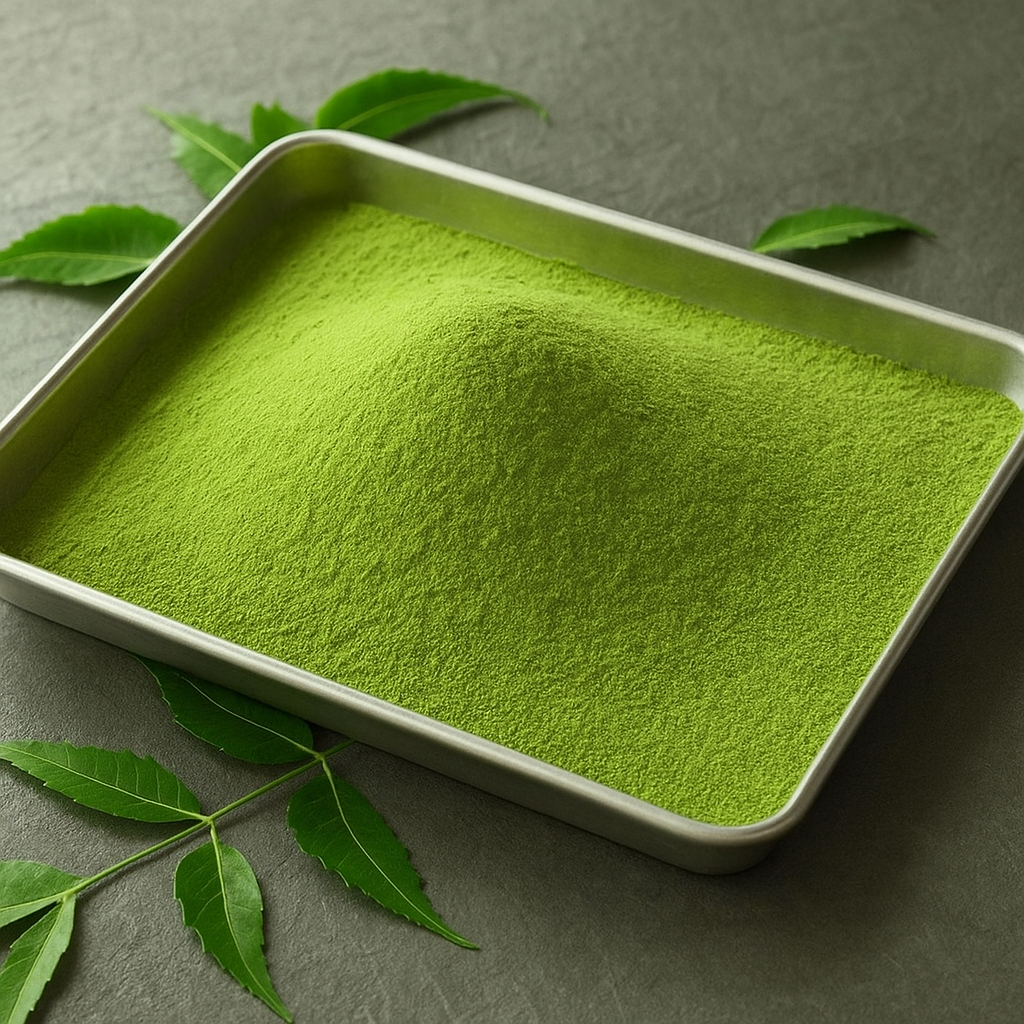
Neem powder is made by drying and finely grinding neem leaves (sometimes also bark or seeds). It is rich in antioxidants, flavonoids, and azadirachtin, giving it potent antibacterial, antifungal, and anti-inflammatory properties.
-
Cosmetics & Personal Care: Used in face masks, soaps, shampoos, and anti-acne products.
Nutraceuticals: Consumed in capsules, teas, or tonics for detox, immunity boost, and blood sugar management.
Pharmaceuticals: Ingredient in traditional medicine for treating skin diseases, infections, and inflammation.
Veterinary: Incorporated in animal feed formulations for parasite control.
Agriculture: As a natural pesticide or plant health supplement in organic farming.
-
Rising demand for herbal supplements and detox products in the U.S. and EU.
Growing adoption of Ayurveda-based skincare in Western markets.
Surge in DIY natural remedies (consumers mixing neem powder with water/oil for home treatments).
Increasing studies on neem powder as a support for diabetes management and antimicrobial resistance.
-
NAICS Codes:
311942 – Spice and Extract Manufacturing.
325411 – Medicinal and Botanical Manufacturing.
325620 – Toilet Preparation Manufacturing.
Entrepreneurial Angle:
Package neem powder in capsules and tea bags for the wellness industry.
Sell in cosmetic-grade sachets for facial masks and DIY skincare.
Develop neem powder blends with turmeric or moringa for added functionality.
Market powdered neem as a multi-use herbal product: skincare, supplement, and organic garden input.
Market Strength & Forecast:
The global herbal supplement market is projected to surpass $150B by 2030, with neem among the fastest-growing Ayurvedic herbs.
Natural skincare is expected to grow at a CAGR of ~7–9%, where neem powder is positioned as a hero ingredient.
Neem powder also rides the wave of the superfood trend, with cross-marketing potential similar to spirulina or matcha in health-conscious markets.